
Money Rituals 7 min read

Rent vs Buy vs Invest:
The Decision Tree Nobody Draws for You

Everyone tells you to “just buy a house.” Nobody shows you the math. Here’s the actual decision framework — with numbers, not opinions.

There’s a version of adulthood that gets sold to Indian women like a checklist. Job, house, then everything else. Nobody explains that buying a home is a financial decision with a return on investment, a timeline, and an opportunity cost — not a personality trait.

India’s residential real estate market hit over 3 lakh unit sales across top 7 cities in 2024, fuelled in part by the exact social pressure you’re feeling right now. But volume doesn’t mean it’s the right move for everyone — and definitely not at every stage of life.

So before you sign anything, here’s the decision tree nobody bothers to draw.
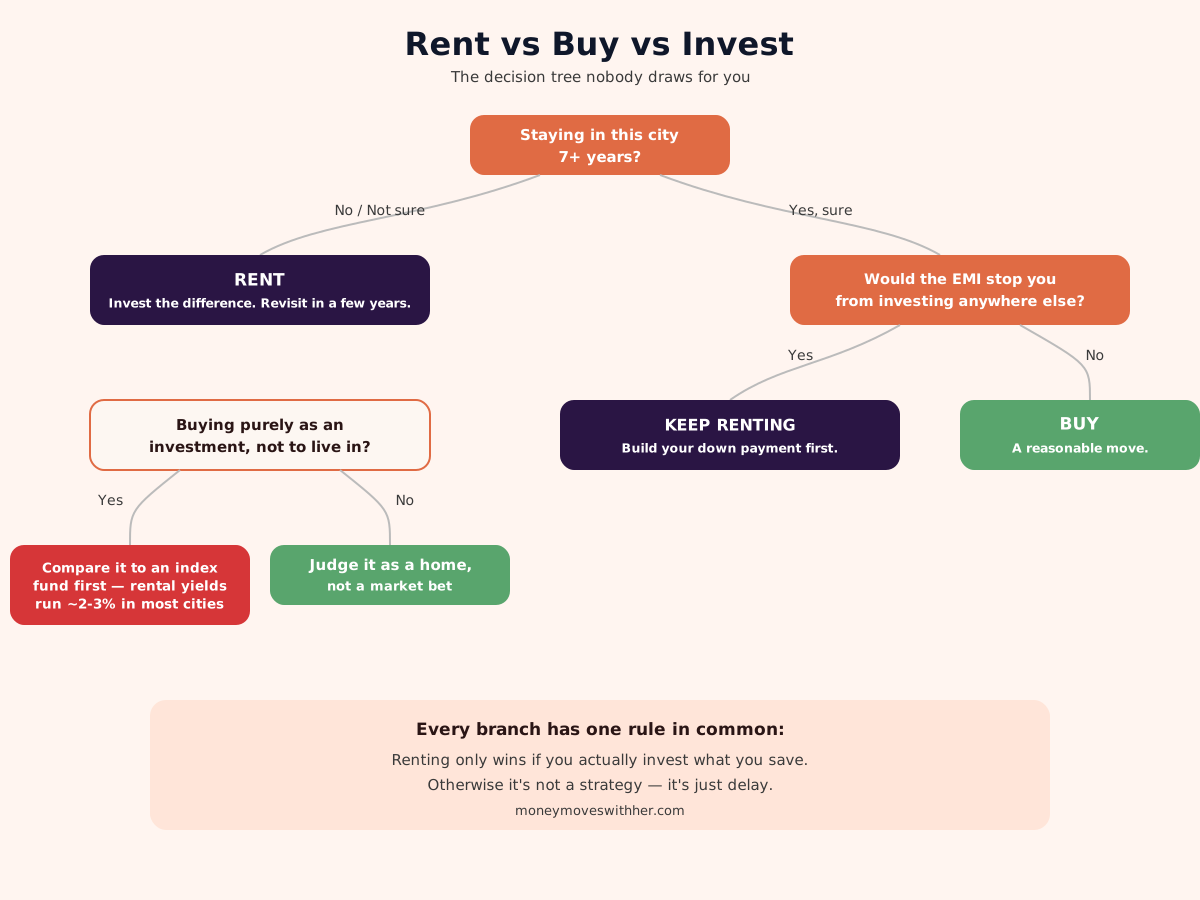
Rent vs buy vs invest decision tree flowchart for Indian women

The decision tree for rent vs buy vs invest — follow your own numbers, not the family group chat.

3.5-4.5%
Avg. rental yield in Indian metros
As per Anarock Research Q2 2026
6–7%
Stamp duty + registration in most states
~12%
Nifty 50 CAGR over the last 10 years
20×
The price-to-rent ratio threshold

That last number is your gut check. If the flat you’re eyeing costs more than roughly 20 times its annual rent, renting and investing the difference usually wins on pure numbers. In most Indian metros today, that ratio sits well above 20 — in some cases closer to 30 or 35.

Question 1: How long are you actually staying put?

This is the first fork, and it decides almost everything else.

Under 5–7 Years
Stamp duty, registration, brokerage, and interest in the early years of a home loan eat into any “equity” you think you’re building. If a job change, a masters abroad, or simply not knowing where life goes is on the table — renting isn’t wasting money. It’s buying flexibility.
Rent wins here
VS
7+ Years, and Sure
Time is what makes real estate work in your favour. It lets appreciation and loan amortisation catch up to the upfront costs. Without that runway, you’re paying a premium for an asset you haven’t held long enough to benefit from.
Buying enters the chat

If you can’t answer this question honestly, stop here. The rest of the tree doesn’t matter yet.

Question 2: What does the EMI actually cost you?

Not the EMI amount. What it costs you elsewhere.

Most people stop at “EMI is basically the same as my rent.” It isn’t the same. Rent is one number. EMI comes with a second layer nobody mentions — maintenance, property tax, repairs, society charges, and a loan that quietly locks up your monthly cash flow for the next 15 to 20 years.

What renting costs
What buying actually costs
Monthly rent
EMI (principal + interest)
Maintenance (often included)
Maintenance + society charges
Deposit (refundable)
Down payment (10–20% locked)
Insurance (optional)
Home insurance + property tax
Freedom to move
Stamp duty + registration (sunk cost)

Question 3: Where does the money go if you don’t buy?

This is the part the “just buy a house” crowd conveniently skips. Renting only wins if you actually invest what you save. If that gap between rent and EMI quietly disappears into lifestyle spending, renting isn’t the smart move — it’s just delayed decision-making with extra steps.

STRATEGY A
Invest the difference
A SIP that runs automatically, untouched. The difference between your rent and a would-be EMI goes into equity or a balanced fund every month, no exceptions.
This is a real financial strategy. ✓
STRATEGY B
“I’ll invest it eventually”
The money sits in a savings account earning 3%. Or worse — it vanishes into Zara and Swiggy one weekend at a time. No auto-debit, no plan, no compounding.
This is not a plan. It’s a wish. ✗

Question 4: Is this a home or an investment?

These are two different questions wearing the same outfit, and mixing them up is where most people go wrong.

Key Distinction
Home ≠ Investment Property
Buying a Home
Doesn’t need to “outperform the market.” It needs to fit your life, your commute, your family, your sense of stability. Judge it on that.
Lifestyle decision
VS
Buying an Investment
Needs to be judged against equity returns, liquidity, and the actual rental yield it generates — which in most Indian metros sits at 3-4% annually.
Financial decision
Your Decision Tree — Summarised
So, rent, buy, or invest?
Not staying 7+ yrs
Rent. Invest the difference. Revisit in a few years.
Staying, but EMI would eat everything
Keep renting. Build the down payment first. Don’t start a home loan from a position of zero cushion.
Staying, EMI manageable
Buying is reasonable — if you’d still invest something every month after it.
Buying as pure investment
Compare it to an index fund before you compare it to your cousin’s flat purchase.

Buying a home isn’t a milestone you’re behind on. It’s a financial decision that deserves the same scrutiny you’d give any large investment — because that’s exactly what it is.

Skip the guesswork. Run your own numbers.

Next Step
Done reading? Now plug in your numbers.
The Rent vs Buy vs Invest Calculator takes your actual property price, city, loan rate, and investment avenue — and shows you which path leaves you wealthier, in rupees, over your real timeline. Powered by live market data.
Open the calculator →

Scroll to Top